

Medical Cyclotron Market Forecast to Reach US$405 Mn by 2033 – Persistence Market Research
Medical Cyclotron Market
The medical cyclotron market is expanding due to increased demand for PET imaging, advancements in nuclear medicine, and growing healthcare investments globally
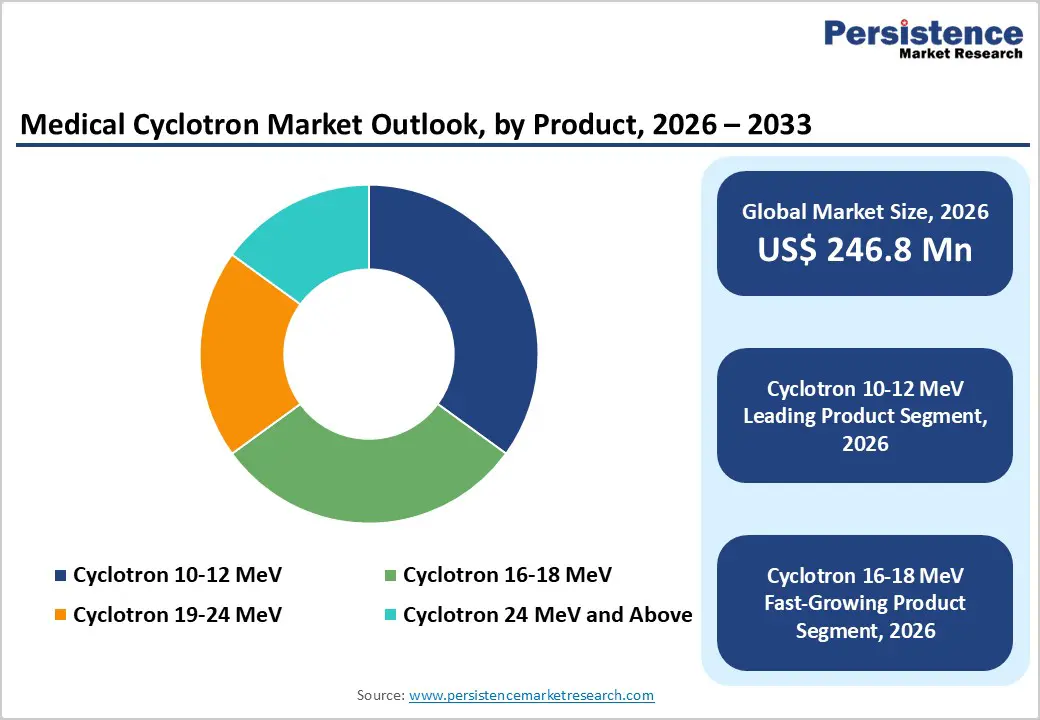
LONDON, UNITED KINGDOM, February 3, 2026 /EINPresswire.com/ -- The global medical cyclotron market is poised for significant growth, with its size expected to expand from US$ 246.8 million in 2026 to US$ 405.4 million by 2033. This growth is driven by a compound annual growth rate (CAGR) of 5.4% between 2026 and 2033, as demand for medical cyclotron systems continues to rise.
Download Your Free Sample & Explore Key Insights: https://www.persistencemarketresearch.com/samples/33117
Key Market Drivers
Several factors are contributing to the expansion of the medical cyclotron market, including the rising adoption of positron emission tomography (PET) imaging, growing investments in nuclear medicine, and a stronger shift towards precision diagnostics and molecular imaging. As the prevalence of conditions like cancer, cardiovascular diseases, and neurological disorders increases, the need for cyclotron-produced radioisotopes, such as fluorine-18 and carbon-11, is growing significantly. These isotopes are crucial for PET/CT and PET/MRI applications, making cyclotrons essential for the production of high-quality diagnostic tools.
Further driving market growth is the expansion of hospitals, diagnostic imaging centers, academic research institutions, and radiopharmaceutical manufacturing facilities, all of which contribute to higher research and development (R&D) spending and improved access to advanced imaging technologies. Continuous innovation in cyclotron design, including more compact systems, enhanced beam stability, and improved target technologies, is boosting operational efficiency and isotope yield.
Additionally, theranostics—a field combining diagnostics and therapy—is becoming increasingly popular, driving demand for localized radioisotope production to reduce reliance on external supply chains. This trend, alongside growing awareness about the benefits of early disease detection, is fueling further market expansion.
Market Restraints
Despite its rapid growth, the medical cyclotron market faces several challenges. High capital costs associated with purchasing and installing cyclotron systems, along with the need for specialized infrastructure and compliance with stringent regulatory requirements, may limit adoption in smaller or less-resourced regions. These systems often require significant upfront investment, including costs for facility construction, shielding, and installation, which can be prohibitive for smaller hospitals or imaging centers.
Operational costs, including ongoing maintenance, skilled personnel, radiation safety, and compliance with local regulatory bodies, also increase the total cost of ownership. Furthermore, navigating the complex regulatory environment—comprising licensing, radiation safety, environmental approvals, and nuclear regulatory requirements—can create delays and raise the risk of project failure. These factors are particularly challenging in emerging markets that lack the necessary infrastructure for cyclotron operation.
Get Custom Insights Designed for Your Business: https://www.persistencemarketresearch.com/request-customization/33117
Opportunities in Theranostics and Compact Cyclotron Adoption
Despite these challenges, several opportunities are emerging in the market. The growing field of theranostics, which merges diagnostic imaging with targeted radionuclide therapy, is creating a surge in demand for medical cyclotrons. Technological advancements in cyclotron design are also enabling the development of compact, cost-effective systems suitable for hospital-based and decentralized radioisotope production. These systems lower entry barriers and make it easier for healthcare providers to produce isotopes on-site, making PET imaging more accessible.
Countries in Asia Pacific, Latin America, and the Middle East are rapidly investing in healthcare infrastructure, which is driving demand for nuclear medicine and cyclotron technology. Governments are also focusing on supporting domestic radioisotope production to reduce dependency on external supply chains and improve access to cutting-edge diagnostic tools. The development of automated cyclotron systems, integration of digital health solutions, and AI-driven optimizations in cyclotron operations are further enhancing market growth.
Regional Insights
North America is expected to maintain the largest share of the global medical cyclotron market, accounting for nearly 47.8% of the total market value in 2026. This dominance is due to the region’s well-established healthcare system, high adoption of PET imaging, strong presence of cyclotron manufacturers, and ongoing investment in nuclear medicine research and infrastructure.
Asia Pacific is forecasted to be the fastest-growing region, with a projected CAGR of 9.7% between 2026 and 2033. This growth is driven by rapid healthcare infrastructure development, a rising cancer diagnosis rate, and increasing PET imaging installations across countries like China, India, and Japan. The region’s growing demand for early detection and personalized medicine is expected to continue pushing market expansion.
Europe, while not growing as rapidly as Asia Pacific, will see steady growth, supported by strong nuclear medicine infrastructure in countries like Germany, France, and the U.K. The region’s regulatory harmonization across the EU and government-backed initiatives for cancer care and molecular imaging further support the market’s growth.
Checkout Now & Download Complete Market Report: https://www.persistencemarketresearch.com/checkout/33117
Market Segmentation
By Drug Class
Antidepressants
Anticonvulsants
Analgesics
Muscle Relaxants
By Treatment
Medication
Therapy
Others
By Distribution Channel
Hospitals Pharmacies
Retail Pharmacies
Online Pharmacies
By Region
North America
Europe
East Asia
South Asia and Oceania
Latin America
Middle East and Africa
Competitive Landscape
The medical cyclotron market is highly competitive, with leading players including IBA (Ion Beam Applications S.A.), GE HealthCare, Siemens Healthineers AG, and Sumitomo Heavy Industries. These companies are at the forefront of technological innovation, focusing on the development of compact, high-energy cyclotrons and advanced radiopharmaceutical production capabilities. Partnerships with healthcare providers, research institutions, and radiopharmaceutical companies are key to expanding market reach and adoption.
Read Related Reports:
Lateral Flow Assay Market: The Lateral Flow Assay market is set to grow from US$8.3 billion in 2025 to US$11.7 billion by 2032, registering a CAGR of 5% over the forecast period.
Non-injectable Insulin Market: The global non-injectable insulin market is poised for 8.6% CAGR growth, elevating from US$1.3 billion in 2025 to US$2.2 billion by 2032.
Persistence Market Research
Persistence Market Research Pvt Ltd
+1 646-878-6329
email us here
Visit us on social media:
LinkedIn
Instagram
Facebook
YouTube
X
Legal Disclaimer:
EIN Presswire provides this news content "as is" without warranty of any kind. We do not accept any responsibility or liability for the accuracy, content, images, videos, licenses, completeness, legality, or reliability of the information contained in this article. If you have any complaints or copyright issues related to this article, kindly contact the author above.
